NACE MR0175/ISO 15156 defines material requirements for H2S-containing environments in oil and gas production. It aims to prevent environmental cracking.
H2S threshold limits vary significantly between alloys and are based on experience and lab evaluations. Factors like CO2, chlorides, pH, temperature, and alloy strength are considered for some alloys
The standard doesn’t cover general or localized corrosion, nor does it provide material specifications for mechanical properties, manufacturing, or quality control. Meeting NACE standards doesn’t guarantee fitness for service.
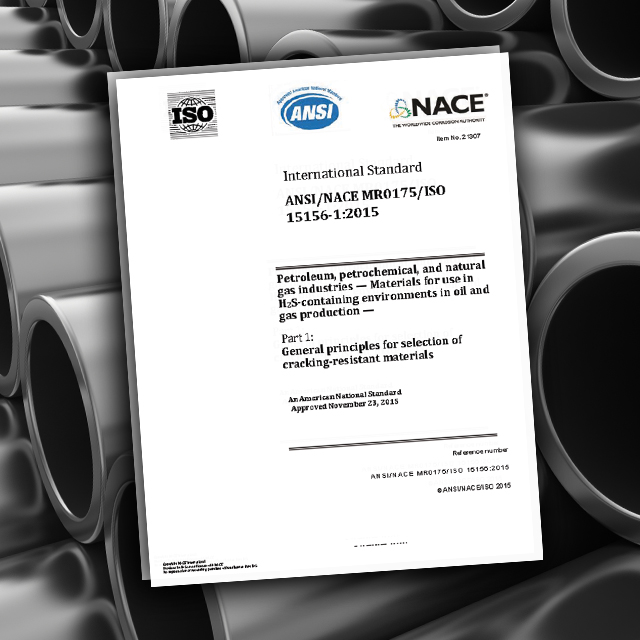
The document too frequently referred to simply as “NACE”, was first issued in 1975 by the National Association of Corrosion Engineers, now known as NACE International. NACE MR0175 is titled: Petroleum and Natural Gas Industries — Materials for use in H2S-containing environments in oil and gas production. It was issued as a recommendation of threshold limits of H2S above which precautions against environmental cracking are considered necessary. In 2003, a similar document was issued to cover the refining industry, NACE MR0103 Materials Resistant to Sulfide Stress Cracking in Corrosive Petroleum Refining Environments. Also in 2003, MR0175 was adopted by ISO and designated as ISO 15156.
— Part 1: General principles for selection of cracking-resistant materials
— Part 2: Cracking resistant carbon and low-alloy steels, and the use of cast irons
— Part 3: Cracking resistant CRAs (corrosion-resistant alloys) and other alloys
The H2S threshold limits have been established based upon a combination of operator experience and laboratory evaluation. The document continues to evolve with the addition of alloys and refinement of the threshold limits. How the threshold limits are defined varies dramatically between alloys or alloy families and the period during which the requirements were added or revised. For some alloys, the H2S threshold limits consider CO2, chlorides, pH, temperature, hardness, and yield strength. For other alloys, the limits are not as strictly defined. MR0175 also provides guidance for the selection and specification of materials when the H2S thresholds are exceeded. This allows for fit-for-purpose testing to qualify a material for a specific application. MR0175 also provides some application-specific limits.
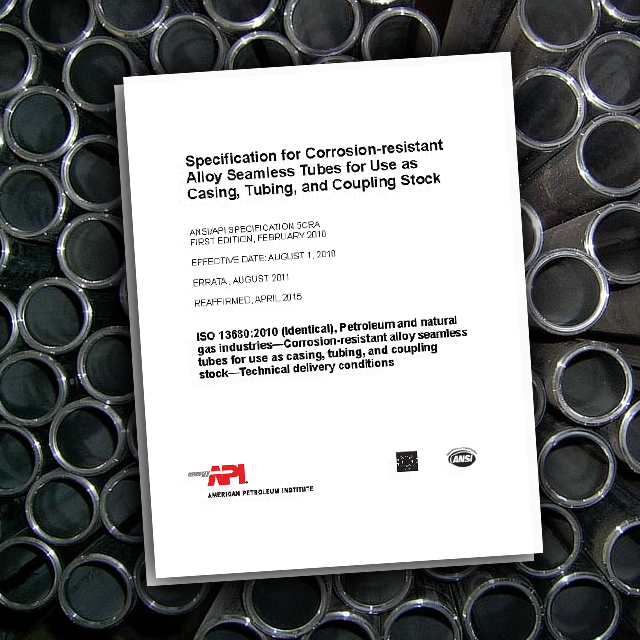
NACE MR0175/ISO 15156 only addresses the resistance of materials to environmental cracking that can be caused by H2S. It does not address loss of material by general corrosion or localized corrosion such as pitting or crevice corrosion. It is also not a material specification, in that it does not address minimum mechanical properties, manufacturing processes, or quality control requirements such as microstructure and non-destructive examination. Just because a material “meets NACE”, doesn’t mean it is fit for service. A perfectly bad piece of material can “meet NACE”. Material specifications such as API 5CRA/ISO 13680 address the requirements for mechanical properties and quality.